Hero
Trusted Technologies
Services

Chachi App

RoleCTO · Lead Backend Engineer · Unity Developer
CompanyChachiApp (Spain)
Duration3 years
PlatformAndroid & iOS
EngineUnity
LanguageC#, TypeScript, JavaScript
UnityC#TypeScript MongoDBFirebaseREST APIs DDDTDDAR
⚡ Project Overview

Chachi App was an Augmented Reality mobile game that transformed real-world locations into an interactive playground. Inspired by location-based experiences, players explored their city to discover and capture virtual characters, compete in leaderboards, and earn real cash prizes.

The application also incorporated social features, requiring a robust backend capable of supporting thousands of users and real-time interactions.

💻 What I Built

I initially joined the project as a Unity developer, later transitioned to backend development, took ownership of the backend architecture, and ultimately became CTO. My responsibilities included:

  • Developing gameplay systems and interactive features in Unity.
  • Architecting and maintaining the complete backend infrastructure.
  • Designing scalable REST APIs using Domain-Driven Design (DDD) and Test-Driven Development (TDD) principles.
  • Managing authentication, player progression, leaderboards, rewards, social features, and cloud services.
  • Leading the backend development while ensuring maintainability and long-term scalability.
  • Coordinating development and design teams as CTO.
  • Estimating features, planning milestones, and supervising technical execution.
  • Contributing to technical strategy and product decision-making throughout the project's lifecycle.
🧠 Technical Challenges

One of the biggest challenges was designing a backend architecture capable of supporting a growing feature set while remaining maintainable over several years of development. Applying Domain-Driven Design helped organize the system into well-defined domains, making the codebase easier to extend and evolve.

As the project expanded, balancing technical leadership with hands-on backend development became equally demanding. I coordinated a multidisciplinary team, planned development cycles, and ensured that technical decisions aligned with business objectives without compromising software quality.

⭐ Key Features
  • Location-based Augmented Reality gameplay.
  • Real-time leaderboards and reward system.
  • Scalable backend architecture.
  • Social platform features.
  • REST API infrastructure.
  • MongoDB and Firebase integration.
  • Domain-Driven Design architecture.
  • Cross-platform Unity application.
🏆 Outcome
  • Successfully launched a commercial Augmented Reality mobile application.
  • Backend architecture designed to support thousands of users.
  • End-to-end backend infrastructure developed and maintained.
  • Technical leadership as CTO while actively leading backend development.
  • Cross-functional collaboration between development, design, and product teams.
  • Successfully delivered new features and maintained the platform throughout its commercial operation.

Golf5 eClub

RoleSenior Unity VR Developer
CompanyGolf5 eClub (Remote – Europe)
Duration2 years
PlatformMeta Quest · Pico VR
EngineUnity
LanguageC#
UnityC#OpenXR Meta QuestPico SDKMultiplayer XR Interaction ToolkitVR Optimization
⚡ Project Overview

Golf5 eClub is a multiplayer Virtual Reality golf experience developed for standalone VR headsets. The project focused on delivering realistic gameplay, smooth multiplayer interactions, and immersive VR mechanics while maintaining the high performance required by standalone devices such as Meta Quest and Pico.

💻 What I Built

As a Senior Unity VR Developer, I contributed to the ongoing development of the game, focusing on gameplay systems, VR infrastructure, multiplayer functionality, and platform compatibility. My responsibilities included:

  • Developing gameplay mechanics for an immersive VR golf experience.
  • Implementing and maintaining multiplayer synchronization systems.
  • Porting the entire project from the Oculus Integration SDK to OpenXR, modernizing the VR architecture and improving long-term compatibility.
  • Integrating the Pico SDK to support deployment on Pico standalone headsets.
  • Optimizing CPU, GPU, and memory usage for standalone VR devices.
  • Collaborating closely with designers and artists to refine gameplay and user experience.
🧠 Technical Challenges

One of the main technical challenges was migrating an established VR project from the Oculus Integration SDK to OpenXR without disrupting existing gameplay systems. This transition required adapting multiple VR interactions while ensuring compatibility across supported devices and preserving the user experience.

Another significant challenge was maintaining stable performance on standalone headsets. Achieving a smooth VR experience demanded continuous optimization of rendering, memory usage, and gameplay systems while supporting multiplayer functionality and multiple hardware platforms.

⭐ Key Features
  • Multiplayer VR gameplay.
  • OpenXR migration.
  • Meta Quest support.
  • Pico platform integration.
  • Gameplay mechanics development.
  • Multiplayer synchronization.
  • Standalone VR optimization.
  • Cross-platform VR compatibility.
🏆 Outcome
  • Successfully delivered new gameplay systems for a commercial multiplayer VR title.
  • Completed the migration from Oculus Integration SDK to OpenXR, modernizing the project's VR pipeline.
  • Expanded platform support through Pico SDK integration.
  • Optimized the application for standalone VR hardware, improving performance and maintaining a smooth player experience.
  • Collaborated within an international remote team to continuously improve the product throughout its development.

Yahtzee with Buddies

RoleSenior Unity Developer
CompanyScopely (Remote – Europe)
Duration1 year
PlatformAndroid & iOS
EngineUnity
LanguageC#
UnityC# Live OperationsMobile Dev Performance OptimizationAgile
⚡ Project Overview

Yahtzee with Buddies is one of the world's most successful mobile dice games, serving millions of players through continuous live operations. The project required the constant delivery of new features, performance improvements, and high-quality updates while maintaining stability across an established production environment.

💻 What I Built

As a Senior Unity Developer, I contributed to the ongoing development of the live game, working closely with multidisciplinary teams distributed across multiple time zones. My responsibilities included:

  • Developing new gameplay features using Unity and C#.
  • Improving existing systems to enhance performance and maintainability.
  • Refactoring gameplay code to support long-term scalability.
  • Collaborating with designers to transform game concepts into polished gameplay experiences.
  • Working alongside QA and backend teams to ensure smooth feature integration.
  • Delivering production-ready code within fast-paced release cycles.
🧠 Technical Challenges

Developing features for a live game with millions of active players required a strong focus on code quality, stability, and backward compatibility. Every new implementation had to integrate seamlessly with an existing codebase while minimizing the risk of regressions.

Another key challenge was collaborating within a fully remote, international team. Coordinating feature development across different disciplines and time zones demanded clear communication, efficient planning, and close collaboration to maintain a consistent release cadence.

⭐ Key Features
  • Live Operations development.
  • Gameplay feature implementation.
  • Performance optimization.
  • Code refactoring and maintainability.
  • Cross-functional collaboration.
  • Continuous feature delivery.
  • Production support for a large-scale mobile game.
🏆 Outcome
  • Contributed to the ongoing development of a mobile game with millions of active users.
  • Successfully delivered gameplay features and improvements within continuous release cycles.
  • Improved performance and maintainability of existing gameplay systems.
  • Collaborated effectively with distributed international teams to maintain product quality and stability.

Commercial Driving Simulator

RoleSenior Unity Developer
CompanyAdvanced Training Systems, LLC (Remote – USA)
Duration3 years
PlatformPC & VR
EngineUnity
LanguagesC#
UnityC# .NET CoreEntity Framework AgileAIAWS Performance Optimization Modular Architecture
⚡ Project Overview

Advanced Training Systems develops professional driving simulators used for commercial driver training. The project combines large-scale traffic simulation, autonomous AI systems, immersive VR experiences, and backend services to create realistic training environments for professional drivers.

The simulator recreates complex urban scenarios where autonomous vehicles, pedestrians, and traffic systems interact dynamically, providing trainees with realistic and repeatable driving exercises.

💻 What I Built

As a Senior Unity Developer, I contributed to both the simulation engine and the supporting backend infrastructure, developing scalable systems for commercial training applications.

My responsibilities included:

  • Developing core driving simulation modules in Unity.
  • Enhancing AI-driven traffic logic, autonomous vehicles, and pedestrian behaviors.
  • Building modular gameplay systems with a strong focus on maintainability and scalability.
  • Developing backend services using .NET Core and Entity Framework Core.
  • Integrating AWS services for cloud data storage and deployment.
  • Creating backend tools to configure traffic scenarios and training exercises.
  • Implementing and maintaining multilingual localization systems.
  • Developing immersive VR training experiences.
  • Optimizing large real-time environments containing numerous interactive entities.
  • Implementing automated testing to improve system reliability and long-term maintainability.
🧠 Technical Challenges

One of the project's biggest challenges was maintaining high performance within large-scale simulation environments populated by numerous AI-controlled vehicles and pedestrians. Achieving smooth real-time execution required continuous optimization of gameplay systems, simulation logic, and memory usage while preserving realistic behavior.

Another significant challenge involved designing modular systems that could support the continuous evolution of the simulator. The project required balancing extensibility, maintainability, and reliability across both Unity and backend components, while integrating cloud services and supporting multiple training scenarios through configurable tools.

⭐ Key Features
  • Commercial driving simulator.
  • Large-scale AI traffic simulation.
  • Autonomous vehicle behaviors.
  • Pedestrian simulation.
  • Modular architecture.
  • VR training experiences.
  • Backend services with .NET Core.
  • AWS cloud integration.
  • Localization system.
  • Performance optimization.
  • Automated testing.
  • Training scenario management tools.
🏆 Outcome
  • Contributed to the continuous development of a commercial driving simulator used for professional driver training.
  • Improved the realism and consistency of AI-driven traffic and autonomous vehicle systems.
  • Developed scalable backend services and cloud integrations supporting simulation management.
  • Built modular systems designed for long-term maintainability and continuous feature expansion.
  • Optimized performance for complex real-time simulation environments.
  • Delivered immersive VR training experiences and multilingual support for international deployments.

Shikoba App

RoleLead Unity Developer
CompanyDonlove SLU (Spain)
Duration3 years
PlatformAndroid & iOS
EngineUnity
LanguageC#
UnityC#Vuforia AWSREST APIsMobile Dev
⚡ Project Overview

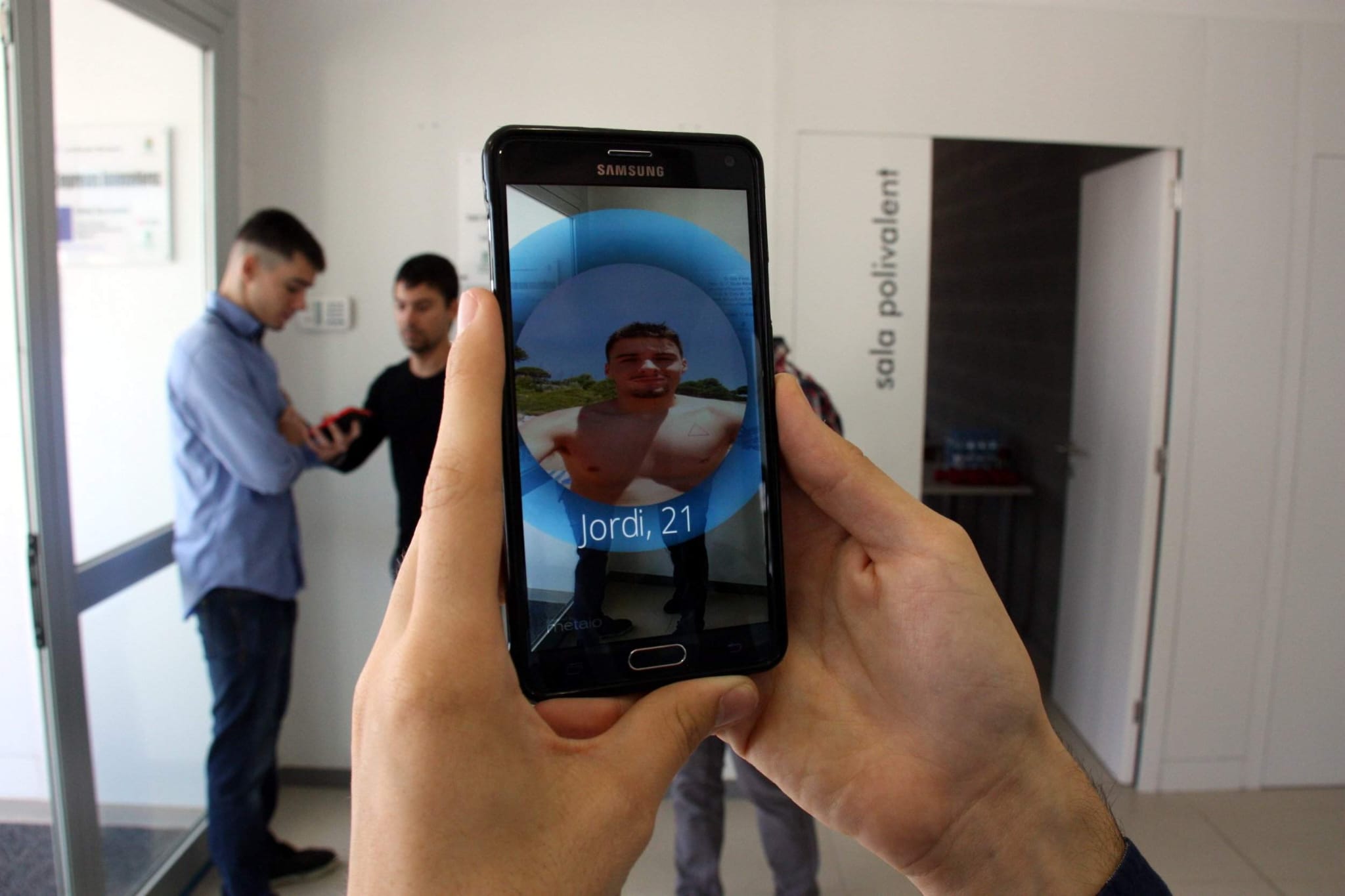
Shikoba was an innovative mobile social networking application that combined location-based services with Augmented Reality, allowing users to discover nearby people through their smartphone camera.

The challenge was to create a smooth and intuitive AR experience capable of combining camera rendering, user positioning, backend communication, and a responsive interface on mobile devices.

💻 What I Built

As the Lead Unity Developer, I was responsible for the complete client-side development of the application. My work included:

  • Developing the entire Unity client from scratch.
  • Designing and implementing the application's architecture.
  • Building all user interfaces and interaction flows.
  • Integrating AWS backend services.
  • Implementing the Augmented Reality experience using Vuforia.
  • Developing animations and visual feedback.
  • Collaborating with designers to transform UI concepts into functional implementations.
  • Working alongside backend developers to ensure reliable communication between client and server.
  • Continuously improving the application's architecture and maintainability.
🧠 Technical Challenges

One of the most demanding aspects of the project was implementing an Augmented Reality experience on mobile devices using Vuforia, several years before ARKit and ARCore became standard technologies.

The application required synchronizing real-time user data from the backend with the AR camera view while maintaining good performance and a responsive user experience across different mobile devices.

Another important challenge was designing a scalable client architecture that could support the continuous addition of new features throughout the project's development.


⭐ Key Features
  • Augmented Reality social experience.
  • Real-time nearby user visualization.
  • AWS backend integration.
  • Cross-platform mobile application.
  • Responsive UI and animation systems.
  • Scalable Unity architecture.
✔ Outcome
  • Complete Unity client developed from scratch.
  • Commercial Augmented Reality mobile application.
  • Successful integration with AWS backend services.
  • Scalable architecture maintained over three years of development.
  • Close collaboration between design, backend, and development teams.
Shikoba — Screenshot 1
Shikoba — Screenshot 2
Shikoba — Screenshot 3
Technical Expertise
Why Work With Me

Common Questions

Absolutely. Whether your project is in early development or already released, I can jump into an existing codebase, understand its architecture, and help implement new features, fix issues, improve performance, or refactor systems without disrupting your workflow.

Yes. I have experience optimizing Unity projects for standalone VR devices such as Meta Quest. I can improve CPU and GPU performance, reduce memory usage, optimize rendering, and help achieve smooth frame rates while maintaining visual quality.

Of course. From simple scripting issues to complex gameplay or performance problems, I investigate the root cause, provide clear explanations, and deliver reliable, maintainable fixes instead of temporary workarounds.

Yes. I'm happy to sign a Non-Disclosure Agreement before reviewing your project or discussing confidential information. Protecting your intellectual property is important to me.

It's simple. Send me a brief description of your project, the challenges you're facing, or the features you'd like to build. We'll discuss the best approach, define the scope, and get started as soon as everything is clear.

Yes. Whether you need help fixing a critical bug, implementing a specific feature, or providing long-term support, I can adapt to your project's needs.

Yes. I can refactor legacy code, improve maintainability, simplify complex systems, and make your project easier to scale and maintain over time.

No. While VR development is one of my specialties, I also develop traditional PC, mobile, and interactive Unity applications.

Absolutely. I'm comfortable collaborating with designers, artists, producers, and other developers using Git, Plastic SCM, Agile workflows, and modern development practices.

Let's build something
great together.

Available for freelance projects, remote contracts, and long-term collaborations. Let's talk.

Let's build something great →